
Zylon, NIJ 0101.06, and the Evolution of Soft Armor Testing
In June 2003, a Pennsylvania police officer was shot through a Second Chance Ultima vest by a round the vest was rated to stop. The vest contained Zylon—poly-p-phenylenebenzobisoxazole, or PBO—a fiber that, on paper, outperformed every aramid available at the time. The fiber had degraded silently under heat and humidity, and the vest no longer possessed the ballistic performance it demonstrated when originally certified.
What followed was the most significant overhaul of soft armor testing since NIJ first published a body armor standard.
Zylon vests were recalled across the United States. NIJ commissioned the PBO Technical Assessment, which documented the degradation pathway and forced the industry to confront a question it had largely ignored:
Does a soft armor panel that passes certification today still pass certification after years of field service?
For Zylon, the answer was often no.
For the standard that existed at the time, the answer was that the standard had never been designed to ask the question.
NIJ 0101.04 tested new panels. Conditioning requirements were limited. Panels were evaluated essentially as new products rather than as equipment that had spent years exposed to heat, humidity, sweat, compression, and daily wear.
The standard successfully answered one question:
Can this new armor stop the specified threat today?
It was never intended to answer a different question:
Will this armor continue to stop that threat years later after exposure to real-world service conditions?
The Zylon failures exposed that gap.
There was another issue present in the earlier standards that received far less attention than the Zylon controversy itself. NIJ 0101.03 and NIJ 0101.04 permitted manufacturers substantial flexibility in soft-armor test panel geometry. In practice, some manufacturers submitted extraordinarily large test articles that extended far beyond the dimensions of a realistic production vest.
Within the industry, these oversized test articles were sometimes referred to informally as "horse blankets."
The reason was simple. The panels were so large that they could wrap significantly around the clay backing material during testing. This changed how the armor interacted with the witness medium and made it easier to satisfy the backface signature requirements.
An easy way to visualize the effect is something almost everyone has experienced while washing a car. You pull a garden hose around a tire and continue walking. At some point the hose wraps around the tire and becomes lodged. Once that happens, movement of the hose on one side is resisted by the portions of the hose extending around the opposite side of the tire.
The same mechanical principle applies to an oversized armor panel wrapped around a clay block. As the armor deforms under impact, the portions of the panel extending around the sides of the backing material act like the hose wrapped around the tire. Movement toward the clay is resisted because the panel must also pull material from the portions extending around the sides and toward the rear of the block.
The result is that some of the impact energy is distributed through the oversized panel geometry rather than being expressed solely as clay deformation. Larger "horse blanket" test articles therefore tended to produce lower backface signature values than more realistic production-sized templates, making it easier to satisfy the BFS requirement with less ballistic material than would later be required under revised standards.
What makes this issue particularly interesting is that these same standards accumulated thousands of documented officer saves in the field. The armor worked. Officers survived. The field performance was undeniable. Dupont Survivors Club lodged over 4500 saves from these two standards (NIJ 0101.03 and NIJ 0101.04)
Yet the testing methodology was increasingly criticized because the geometry of the test article itself could influence the resulting BFS measurements.
The industry’s response was not to reject the armor.
The response was to require test articles that more closely represented the vest actually worn by the officer.
The first major response was the Interim Requirements of 2005.
Among other changes, NIJ adopted smaller and more realistic production-style templates. Manufacturers immediately discovered that maintaining compliance under the revised geometry often required additional ballistic material. In practical terms, many armor systems became heavier.
In some armor circles, this change became known informally as the "anti-horse-blanket rule."
An interesting historical question remains.
If Zylon-based systems had been required to pass using the smaller Interim 2005 test geometry from the beginning, would the additional ballistic margin have altered the outcome in the field?
The question is ultimately unanswerable.
By the time the Interim Requirements were adopted, the industry had already concluded that Zylon could no longer be trusted as a primary ballistic material, and its use effectively disappeared from certified armor.
The final response was NIJ 0101.06, published in 2008.
The new standard represented a substantial increase in testing severity. Some observers viewed portions of the revision as an overcorrection to the Zylon crisis. Others viewed the changes as overdue. Regardless of perspective, the objective was clear: ensure that armor performance reflected not only day-of-manufacture capability but also expected service-life performance.
NIJ 0101.06 introduced immersion conditioning and mechanical tumbling before ballistic testing. The protocol attempts to expose armor to environmental and mechanical stresses intended to simulate years of use.
No laboratory procedure can perfectly replicate the real world.
No conditioning protocol can reproduce every patrol car, every climate, every storage condition, or every officer.
What the standard does accomplish is forcing manufacturers to design for durability rather than merely initial performance.
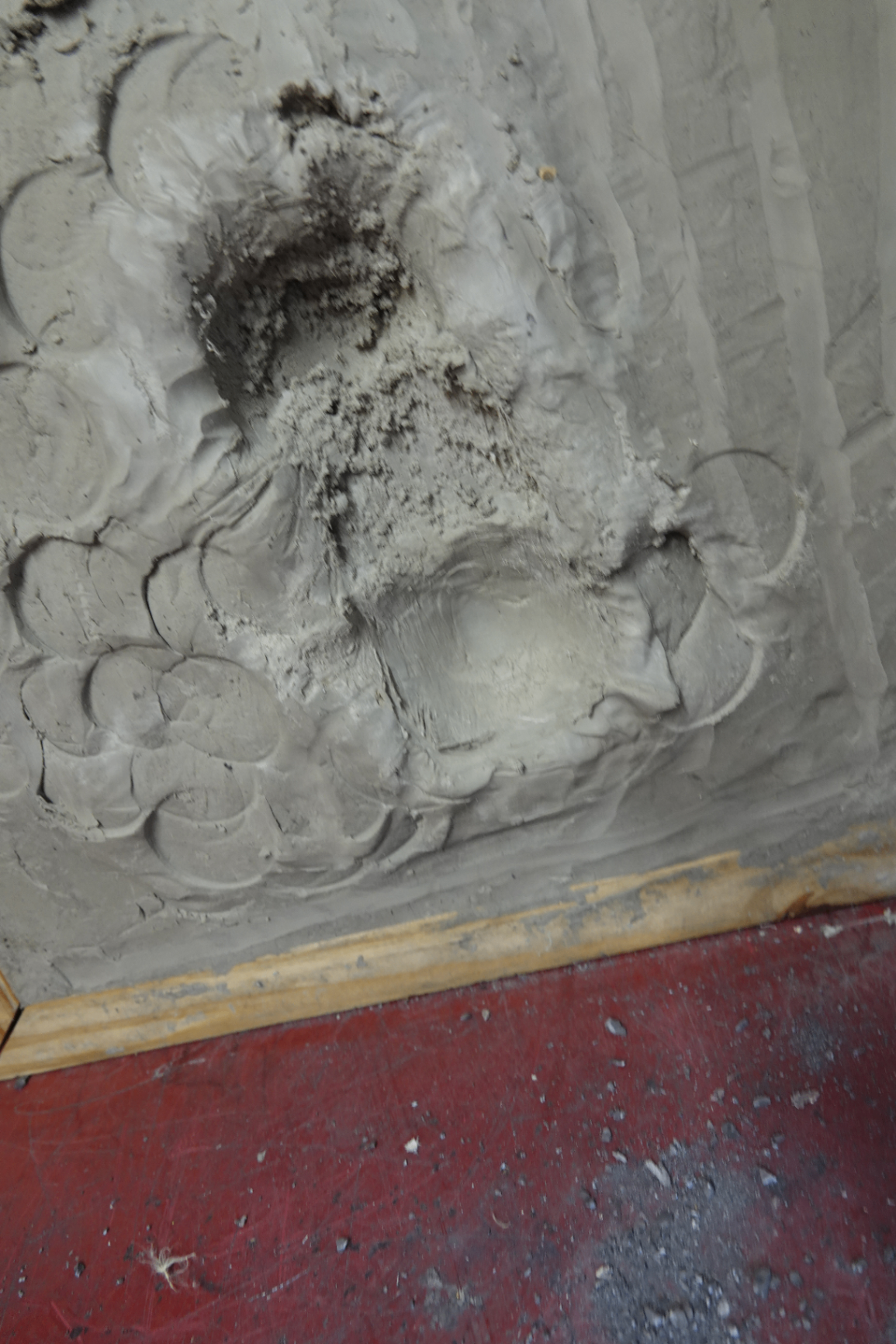
The clay survived the rewrite.
The 44 mm backface signature threshold survived as well.
What changed was the recognition that neither the clay nor the resulting BFS measurement should be treated as perfectly deterministic.
One of the less discussed changes involved clay calibration itself. Earlier protocols used shaped calibration impactors dropped from a specified height into the witness medium. NIJ 0101.06 revised the calibration procedure by adopting a steel sphere impactor and a more controlled calibration process intended to reduce variability caused by impact orientation and calibration inconsistency.
More importantly, NIJ acknowledged what decades of testing had already demonstrated: the clay is not a fixed constant.
It is a controlled variable.
Armor systems, projectiles, and witness media all contain variation, and the resulting BFS measurements contain variation as well.
For that reason, NIJ 0101.06 moved away from treating every individual BFS measurement above 44 mm as an automatic indication of failure. The standard permits individual BFS measurements up to 50 mm provided the statistical analysis of the test data demonstrates compliance with the required population tolerance limits. In practical terms, the standard recognizes that occasional BFS spikes can occur even within otherwise compliant armor systems.
That change is significant.
It represents an acknowledgment that backface signature is not an absolute quantity but rather a measurement obtained from a test system that contains inherent variability.
There was another equally important acknowledgment.
Post-certification fit audits and Follow-up Inspection and Testing (FIT) programs evaluate production armor removed from manufacturing runs rather than the certification test articles originally submitted for approval. Because production vest geometries differ from certification templates, FIT testing historically focused on ballistic penetration performance while largely avoiding the use of BFS as a pass-fail criterion.
The implication is difficult to ignore.
The industry has long accepted that production armor can differ geometrically from certification samples while still providing acceptable ballistic protection. The primary concern during audit testing has always been whether the projectile penetrates the armor, not whether the resulting clay deformation exactly reproduces certification values.
This does not mean BFS is unimportant.
It means BFS must be understood in context.
The standards continue to use it because it remains one of the best comparative tools available for evaluating armor performance. At the same time, the standards themselves recognize that BFS measurements are influenced by geometry, conditioning, test variation, and witness-medium behavior.
That reality aligns with the broader lesson of the Zylon era.
Laboratory measurements are valuable because they provide consistency and comparison.
They should not be mistaken for direct measurements of survivability.
The clay remains useful.
The 44 mm threshold remains useful.
But both are best understood as engineering tools rather than absolute predictors of human outcomes.
The reason is not that the clay is perfect.
The reason is that the clay provided a common reference point around which decades of laboratory procedures, certification data, calibration methods, and engineering experience had been built.
Replacing the witness medium would have required revalidating an enormous body of historical data and rebuilding much of the testing infrastructure from the ground up.
That does not mean the clay is beyond criticism.
Many armor engineers and test laboratories acknowledge that alternative witness materials exist which may be easier to handle and less sensitive to conditioning requirements. Critics argue that Roma Plastilina remains as much a product of institutional inertia as technical necessity.
Nevertheless, the clay remains the industry’s common ruler.
The most dramatic changes occurred around the clay rather than within it.
Sample sizes increased.
Conditioning became more severe.
The Compliant Products List evolved into a public certification database.
Post-certification audit testing became routine.
Manufacturers were expected not only to pass the test, but to continue producing armor capable of passing the test.
NIJ 0101.07 represents the next evolution.
The familiar IIA, II, IIIA, III, and IV designations are replaced with HG and RF classifications. Environmental conditioning becomes more demanding. Threats are updated to reflect modern ammunition. The protocol continues to evolve.
The clay remains.
The system around it continues to tighten.
The lesson of the Zylon era is not that armor testing is broken.
It is that armor testing is a living system.
The system improves when failures expose weaknesses.
The lesson is remarkably similar to the debate surrounding backface signature. A laboratory test can only answer the question it was designed to ask.
NIJ 0101.04 asked whether a new panel could stop a bullet.
It did not ask whether the same panel would continue to stop bullets years later.
Likewise, a backface-signature measurement tells us how armor performed against a conditioned clay backing under controlled laboratory conditions. It does not fully describe survivability in the field.
In both cases, the challenge is not the test itself.
The challenge is understanding the limits of what the test can tell us.
Manufacturers who design only to the letter of the current standard are designing for the last failure.
The work is to design for the next one.
Our soft armor is built to NIJ 0101.06 with margins intended to anticipate the requirements of NIJ 0101.07.
We do not use PBO.
We do not use fibers whose long-term hydrolytic stability has not been demonstrated across the intended service life of the product.
The Zylon recall is older than many officers currently wearing armor.
Yet the engineering discipline it forced upon the industry remains one of the reasons those officers can have greater confidence in the armor they wear today.
TALK TO ENGINEERING
Have a procurement question this article didn't answer?
Our sales engineers respond directly. No call-center, no sales script.
Contact engineering
The relativity of backface signature — why the 44 mm number isn't what you think
Backface signature, explained — what the clay actually tells you